


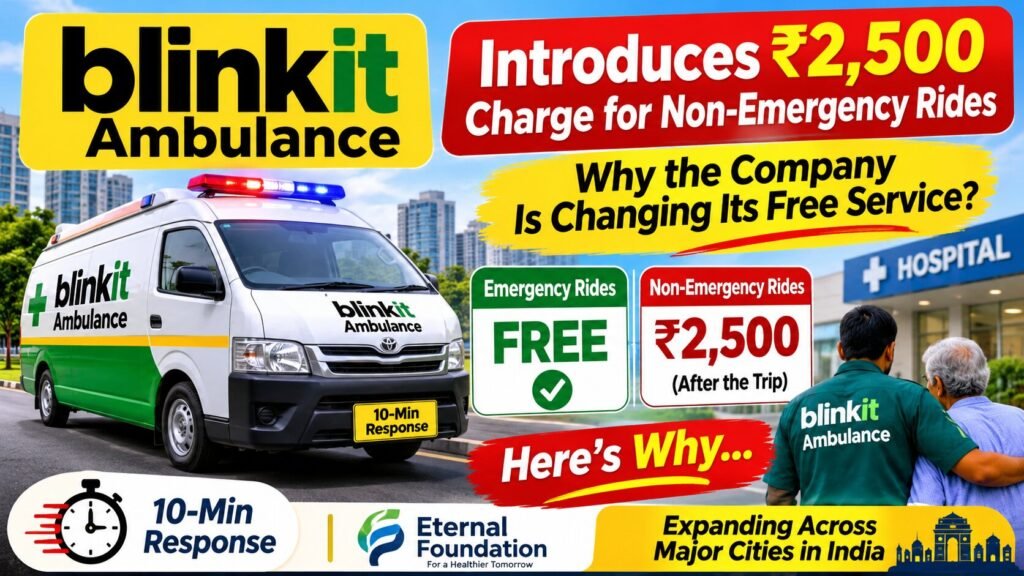
Blinkit has introduced a ₹2,500 charge for non-emergency ambulance rides, while emergency services will remain completely free. The move aims to keep ambulances available for critical patients and support future expansion across India.
Blinkit Ambulance Introduces ₹2,500 Charge for Non-Emergency Rides: Why the Company Is Changing Its Free Service
Blinkit is changing the way its ambulance service works in India. The company has announced that its ambulance rides will remain completely free for medical emergencies, but customers will now have to pay ₹2,500 for non-emergency transfers.
The decision is aimed at keeping ambulances available for people who urgently need medical help. According to the company’s announcement, the service has handled around 42,000 cases in the last two years, including approximately 20,000 emergency cases. Until now, the company had not charged customers anything for these services.
Blinkit believes that its free ambulance service should mainly support patients facing serious medical emergencies rather than being used for regular hospital visits
Read also – https://fingossip.com/8th-pay-commission-salary-hike/
Why Is Blinkit Introducing a ₹2,500 Ambulance Charge?
The main reason behind this decision is the increasing use of ambulances for non-emergency purposes.
According to the announcement, some customers were using Blinkit ambulances for routine medical checkups, regular hospital visits and transfers from hospitals to their homes.
Although these journeys may be important for patients, they do not always require a fully equipped emergency ambulance.
The problem is that when an ambulance is busy with a routine hospital transfer, it cannot immediately respond to another patient who may be facing a life-threatening situation.
Blinkit’s ambulance service is designed to provide quick emergency support, with a target response time of around 10 minutes. Keeping these vehicles available is important because even a small delay can matter during a medical emergency.
To reduce unnecessary bookings, the company has decided to introduce a ₹2,500 charge for non-emergency transfers.
This amount will be collected after the journey is completed. The company says the charge is broadly in line with what private ambulance services charge.
However, emergency ambulance rides will continue to remain free. This means people who genuinely need urgent medical assistance will not have to pay for the service.
Read more – https://fingossip.com/jio-vs-airtel-q2-results-comparison-2026/

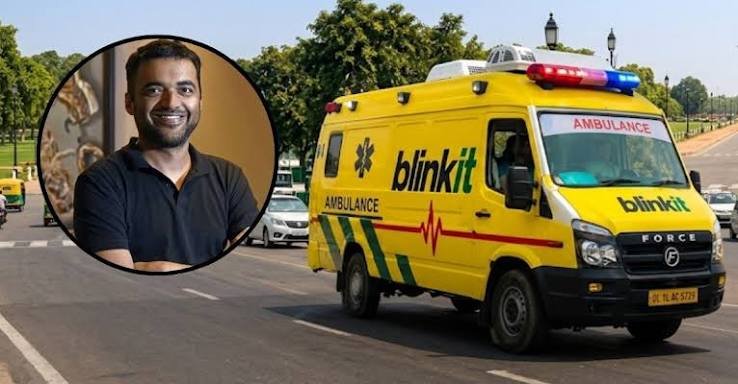
Where Will the ₹2,500 Go and What Is Blinkit’s Future Plan?
The company has also explained how the money collected from non-emergency bookings will be used.
The ₹2,500 charge will go to Eternal Foundation, which manages the ambulance operations. The money will help support the existing service and make it possible to expand the ambulance network further.
Blinkit wants to bring its ambulance service to all major cities in India over the next two to four years. However, expanding this service is not as simple as adding more vehicles to the roads.
One of the biggest challenges is finding and training skilled paramedics who can handle emergency situations with proper medical knowledge and care.
The company says its training academy is expanding to prepare more trained paramedics without compromising on service quality.
This is an important part of the expansion plan because an emergency ambulance needs more than just a vehicle. It also requires trained staff, medical equipment and the ability to respond quickly when someone needs help.
For Blinkit, the latest decision is about managing demand and keeping emergency vehicles available for the patients who need them most.
The company wants to continue providing free emergency ambulance services while reducing bookings for journeys that can be handled through regular transport or private ambulance services.
The new ₹2,500 charge may change how people use Blinkit ambulances, but the main purpose of the service remains the same: helping people during medical emergencies.
If the company successfully expands its network and training facilities, Blinkit Ambulance could become an important part of emergency medical support in more Indian cities.