





Gold Prices Are Up, But Did You Really Make a Profit? The Dhanteras 2026 Reality Check
Gold has always been an important part of Indian families’ savings. Many people buy jewellery, coins or gold bars during Dhanteras, hoping that their purchase will become more valuable over time. But a higher gold price does not automatically mean that every gold buyer has made a good profit.
With Dhanteras falling on November 6 this year, people who purchased gold last year may be checking how much their investment is worth today. The numbers look positive, but there is an important detail that buyers should not ignore: the market price of gold and the actual return received by a buyer can be very different.
Read also – https://fingossip.com/%e2%82%b9100-crore-stock-market-scam/
A 10-Gram Gold Purchase: What Do the Numbers Say?
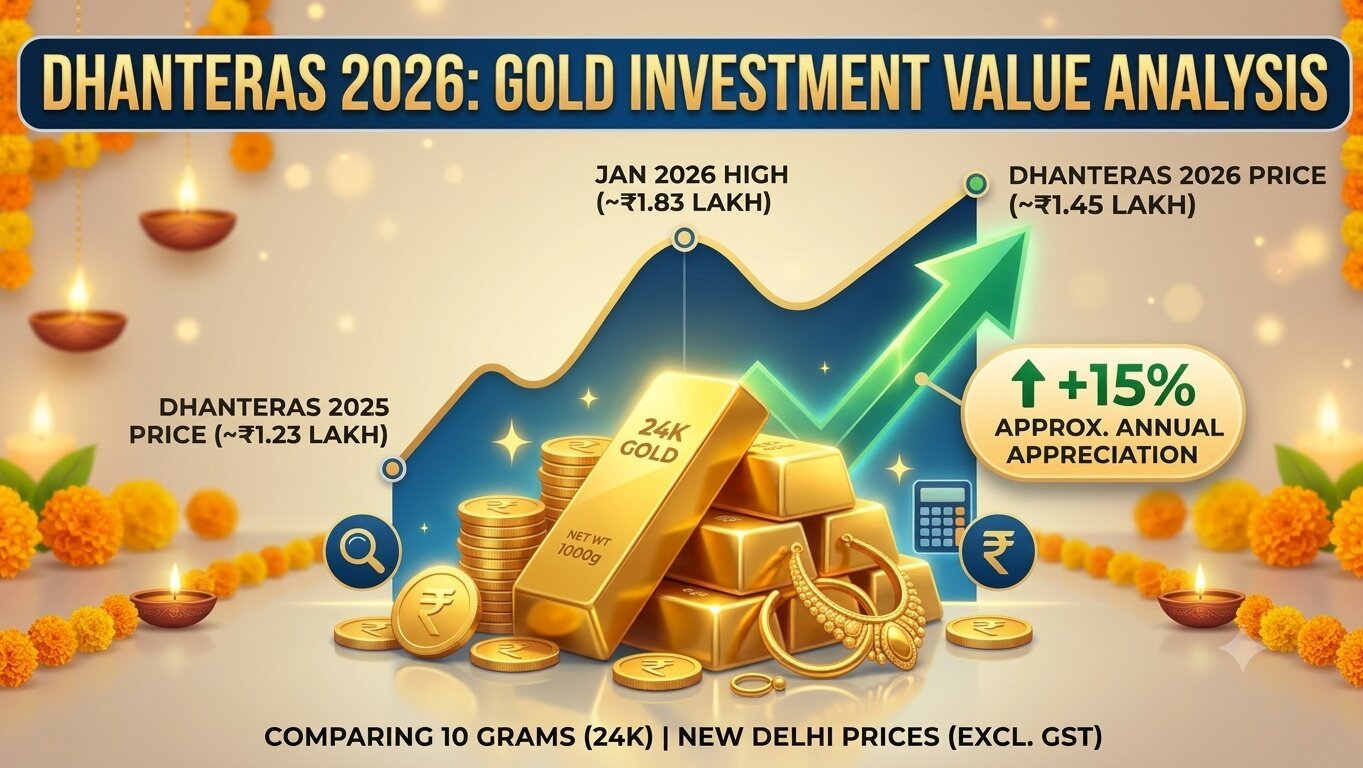
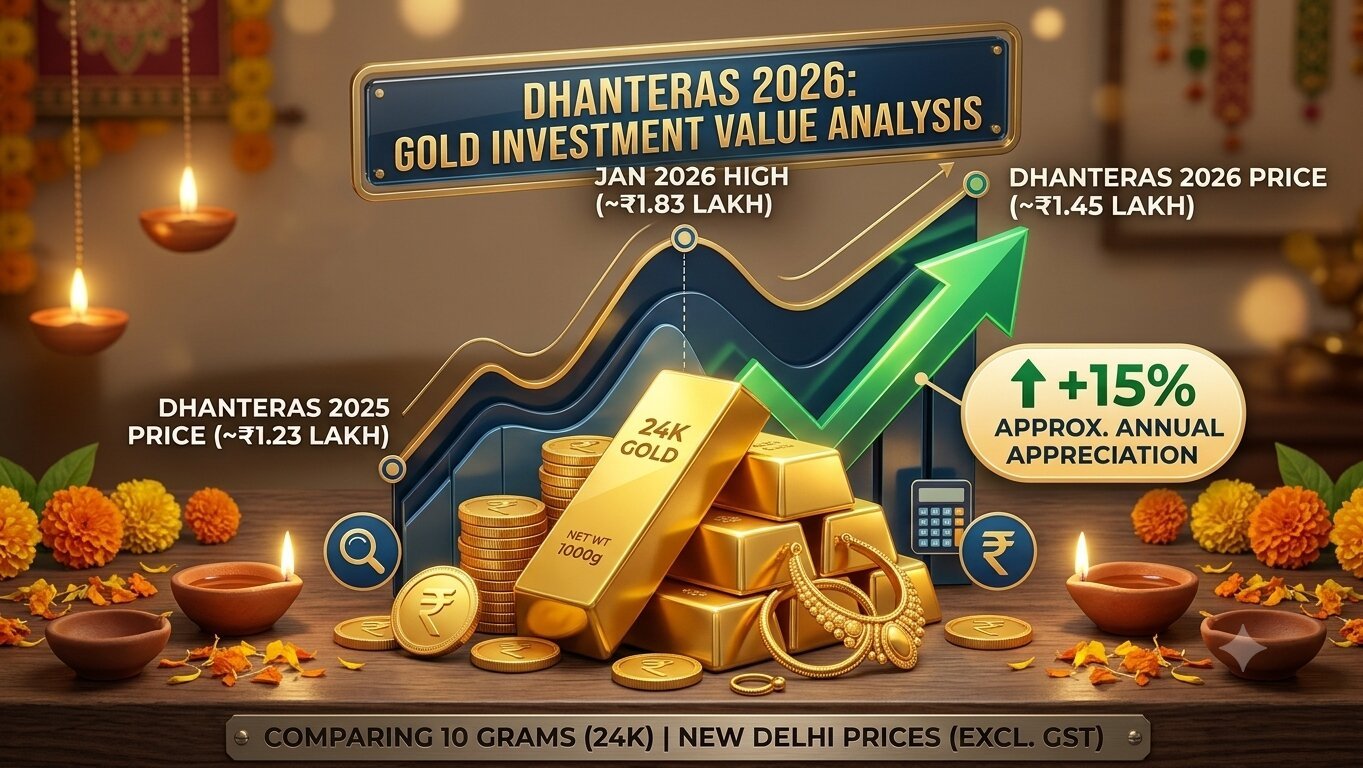
According to the India Bullion and Jewellers Association (IBJA), the benchmark price of 24-carat gold was ₹1,29,584 per 10 grams on October 17, 2025, the last working day before Dhanteras last year.
On November 4, 2026, the IBJA evening rate reached ₹1,41,622 per 10 grams. This means the benchmark value increased by ₹12,038, or around 9.29%, in one year.
In simple terms, 10 grams of gold bought at the earlier benchmark price would be worth approximately ₹1.41 lakh at the later benchmark rate. On paper, that looks like a positive return.
However, this is a comparison of gold benchmark prices, not a guaranteed profit for someone who purchased jewellery from a shop. IBJA rates do not include GST or making charges. The final purchase bill can therefore be higher than the benchmark value.
Read Also – https://fingossip.com/sensex-nifty-strong-back/
 Why Your Actual Profit May Be Lower
 Why Your Actual Profit May Be Lower
Imagine a family bought a 10-gram gold necklace last Dhanteras. The family did not pay only the gold rate. The final bill may also have included making charges and GST.
Making charges are the amount paid for designing and manufacturing the jewellery. These charges can vary from one jeweller to another and from one design to another. When the jewellery is sold later, the buyer may not recover the full making charges.
Resale deductions can also affect the final amount. A jeweller may calculate the value based on the purity and weight of the gold and apply deductions according to the jewellery’s condition, stones or other components.
This is why a 9.29% increase in the benchmark gold price should not be treated as a 9.29% return on every jewellery purchase.
Gold coins and bars may have a different cost structure from jewellery, but buyers should still check premiums, taxes and the seller’s buyback policy before purchasing.
What Should Buyers Check This Dhanteras?
People planning to buy gold on Dhanteras should first decide whether they are buying it for personal use, family occasions or long-term savings. Jewellery bought for wearing and gold bought as an investment are not exactly the same.
Before making a purchase, compare the gold rate at different trusted jewellers. Check the purity, BIS hallmark and HUID details. Ask for a clear bill showing the gold value, making charges and GST separately.
Also ask the jeweller about the exchange and buyback policy. Understanding these terms before paying can help avoid surprises when you decide to sell or exchange the gold later.
Gold prices have also seen sharp movements this year. A fall from a recent high does not guarantee that prices will rise again, and buying during a festival does not ensure a profit.
For FinGossip readers, the main takeaway is simple: gold may have become more valuable compared with last Dhanteras, but the real return depends on what you paid, what you bought and how much you can recover when you sell it.
A higher gold rate is good news on paper. But smart gold buying means looking beyond the rate and checking the complete cost.