









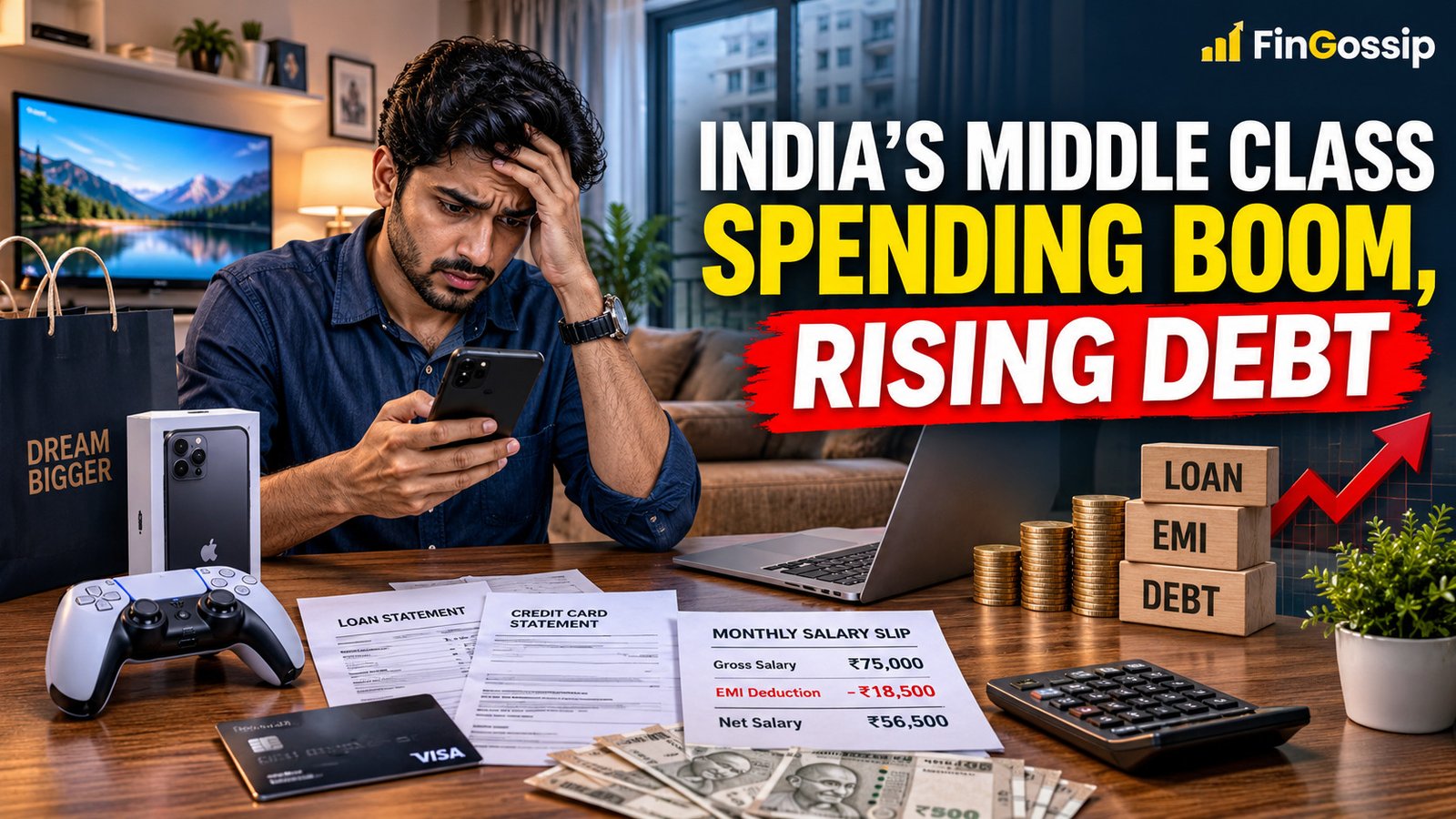
India’s middle class is increasingly using personal loans and credit cards to afford expensive lifestyle products. However, rising EMIs are putting pressure on monthly salaries, reducing savings and investments. The growing dependence on borrowed money highlights the need to balance lifestyle spending with long-term financial security.
India’s Middle Class Spending Boom: Young Indians Are Buying More, Saving Less
India’s middle class now spends more on smartphones, televisions, gaming consoles, holidays, and other lifestyle products. With easy access to personal loans, credit cards, and Buy Now, Pay Later (BNPL) services, many people buy expensive items even if they do not have the full amount in their bank accounts.
But this spending boom is also causing financial problems. For some young earners, monthly loan repayments take a large part of their salaries. This leaves less money for savings, investments, and daily expenses.
The story of 25-year-old restaurant worker Navjot Singh shows this new spending pattern. He earns about ₹50,000 each month. He took loans to buy an iPhone, PlayStation, and television. He also borrowed money for a wine and spirits course and for a trip home.
At first, these purchases improved his lifestyle. But as loans added up, repayments started taking almost half his salary. He had to spend less on food, clothes, gym membership, and entertainment.
His experience raises an important question: Is India’s middle class really enjoying a better lifestyle? Or is it becoming more dependent on borrowed money?
 Easy Loans Are Changing How Young Indians Spend
 Easy Loans Are Changing How Young Indians
A few years ago, buying an expensive smartphone or television meant saving for months. Today, personal loans, credit cards, and EMI options have changed that.
Now, customers can buy things right away and pay for them over several months. This makes expensive products seem affordable because buyers look at the monthly payment, not the total price.
Banks and fintech companies have made borrowing easier with digital apps and quick loan approvals.
For young professionals, this means they can enjoy a lifestyle that once took years to afford.
But easy borrowing can also lead to unnecessary spending. When someone takes one loan for a phone, another for a TV, and another for travel, all the monthly payments together can become hard to manage.
The real problem is not just buying expensive things. It is buying many things on credit without checking if your monthly income can handle all the repayments.
Rising EMI Payments Are Putting Pressure on Monthly Budgets
The main problem with multiple loans is that each purchase brings a new financial commitment.
Someone earning ₹50,000 per month may feel comfortable paying a few thousand in EMIs at first. But as more loans and credit card payments are added, the available income keeps shrinking.
For example, imagine someone with a salary of ₹50,000 per month and total loan repayments of ₹20,000.
After paying EMIs, only ₹30,000 is left for rent, food, transport, household expenses, savings, and emergencies.
This leaves little room for unexpected expenses.
When repayments get too high, people may start spending less on essentials, entertainment, and personal growth. Some may even use more loans or credit cards to manage payments, creating a cycle of borrowing.
That’s why borrowers should always check their total monthly debt before taking another loan. They should think about interest rates, fees, loan tenure, and late payment charges—not just the EMI amount.
What This Spending Trend Means for India’s Middle Class
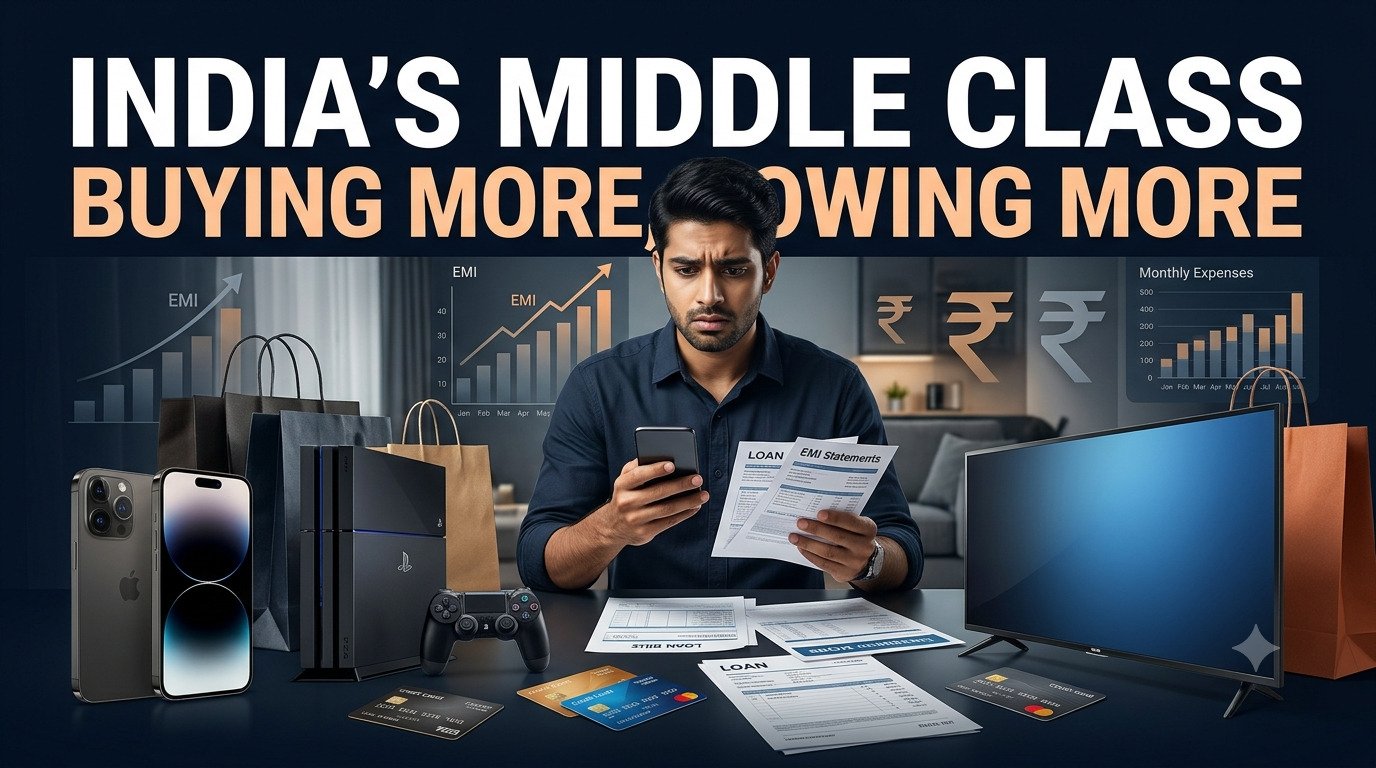
India’s growing consumer market is creating opportunities for businesses in electronics, travel, entertainment, automobiles, and retail.
More people are buying things that once seemed too expensive. This supports demand and gives companies more business.
But there is a big difference between spending supported by rising income and spending supported by debt.
When people buy things with their regular income, they have more flexibility with their monthly budget. But when spending depends on loans, much of their future income is already committed.
This can hurt household savings and investments. Money that could go to mutual funds, fixed deposits, emergency funds, or retirement planning may instead go to loan repayments.
For India’s middle class, balancing lifestyle spending and financial security is becoming more important.
Before taking a loan for something non-essential, borrowers should check if they can afford the EMI and still keep saving. Having an emergency fund and avoiding unnecessary credit card debt helps reduce financial stress.
India’s spending boom shows changing dreams and easier access to credit. But a better lifestyle is only possible when income, spending, and savings all grow together.




One thought on “Why India’s Middle Class Is Taking More Debt that Rising EMI to Buying More, Saving Less”