



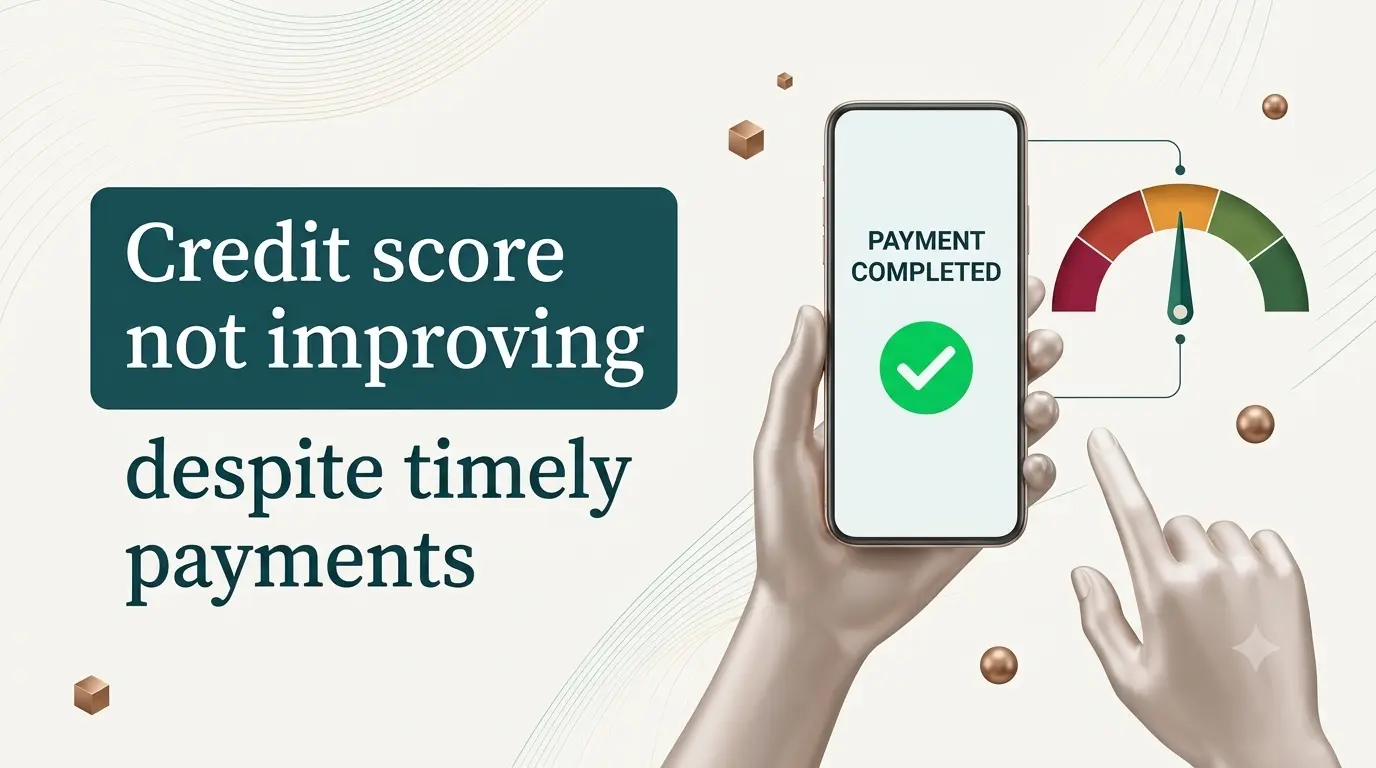
Repaid your personal loan but your credit score hasn’t moved? That’s normal. Lenders usually report to credit bureaus once a month, so the update can take 30 to 45 days to appear. Closing a loan can also change your credit mix, which may keep the score flat or cause a small dip. Experts say the key step now is to check your credit report and confirm the loan shows as “Closed.”
Personal Loan Closed but Credit Score Not Improving? Experts Explain Why
Closing a personal loan is an important step towards becoming debt-free. You may expect your credit score to improve once you have paid every EMI and cleared the outstanding balance. However, many borrowers notice that their score remains unchanged or even drops slightly after closing a loan.
This can be confusing, especially when you have made all your payments on time. The reason is that closing a loan does not automatically increase your credit score. Your score depends on several factors, including your repayment history, existing debt, credit card usage and the length of your credit history.
Here is why your credit score may not improve after closing a personal loan and what you can do about it.
1. Your Credit Report Has Not Been Updated Yet
One common reason is a delay in updating your credit report.
After you repay your personal loan, the lender must report the updated account status to credit bureaus such as TransUnion CIBIL, Experian, Equifax or CRIF High Mark. This process may take some time.
If your report still shows an outstanding balance or an active loan, your credit score may not reflect the closure immediately.
What should you do?
- Keep your loan closure letter or No Dues Certificate (NDC).
- Check your credit report after a few weeks.
- If the loan still appears active or the balance is incorrect, contact your lender.
- Raise a dispute with the relevant credit bureau if the information is not corrected.
Do not assume that the loan has been reported correctly just because you have paid your final EMI.

2. Your Previous Payment History Still Matters
Your credit score is influenced by your repayment behaviour over time, not just your current outstanding debt.
If you missed EMIs, paid late or had overdue amounts during the loan period, these details may remain on your credit report even after the loan is closed.
Paying the remaining balance clears your debt, but it does not automatically erase the record of earlier late payments.
For this reason, a borrower who has recently closed a loan may not see an immediate improvement in their score.
The practical solution: Pay all your current EMIs and credit card bills on time. Consistent repayments can help build a stronger credit profile over time.
3. Closing a Loan Does Not Guarantee a Higher Score
Many people believe that becoming debt-free always leads to a better credit score. In reality, credit scoring models consider several aspects of your credit history.
For example, if you already had a strong score and a manageable debt level, closing one personal loan may make little difference. Your score might remain almost the same because the loan closure has not significantly changed your overall credit profile.
Credit scores also change according to the information available when the score is calculated.
Therefore, an unchanged score does not necessarily mean something is wrong.
4. Your Credit Card Usage May Be Too High
If you use credit cards, your credit utilisation ratio can affect your score.
Credit utilisation means the percentage of your total available credit limit that you are using.
For example, suppose your total credit card limit is ₹1,00,000 and your outstanding balance is ₹70,000. Your credit utilisation is 70%.
Even after closing your personal loan, high credit card utilisation may continue to put pressure on your credit profile.
What can help?
Try to keep your credit card balances low relative to your available limits. Paying the full statement balance by the due date can also help you avoid interest charges and late-payment issues.
A lower utilisation ratio is generally favourable, although no particular percentage guarantees a specific score increase.
5. Your Credit History May Be Short
The length of your credit history can also influence your credit score.
If your personal loan was your oldest or only credit account, closing it may reduce the amount of active credit history available to scoring models. The effect depends on the scoring model and the rest of your credit profile.
This does not mean you should keep a loan open just to maintain your score. Paying interest on a loan you no longer need is generally not a sensible way to manage credit.
Instead, focus on maintaining a good repayment record on any credit accounts you genuinely need.
6. You Have Applied for Too Much Credit Recently
Have you applied for a credit card, another personal loan or several other loans recently?
Multiple credit applications within a short period can lead to several hard enquiries on your credit report. These enquiries may affect your score, depending on the scoring model and your overall profile.
Closing your previous personal loan will not automatically cancel out the effect of recent credit enquiries.
To avoid unnecessary enquiries, compare loan terms carefully and apply only when you genuinely need credit.
7. There May Be an Error in Your Credit Report
Sometimes, the problem is not your financial behaviour but incorrect information in your credit report.
For example, your report might show:
- An outstanding balance even though you have repaid the loan.
- A closed loan incorrectly marked as active.
- An EMI marked as overdue despite being paid on time.
- An account that does not belong to you.
Such errors can affect how lenders and credit scoring models assess your credit profile.
Check your credit report carefully. If you find an error, raise a dispute with the credit bureau and contact the lender responsible for reporting the information. Keep your payment receipts and closure documents as supporting evidence.

How Long Does It Take for a Credit Score to Improve After Closing a Loan?
There is no fixed timeline for a credit score to improve after closing a personal loan.
The account status may take several weeks to update, depending on the lender’s reporting cycle and the credit bureau’s processing time. Even after the report is updated, your score may remain unchanged because other factors continue to influence it.
If your score has not improved after a reasonable period, check whether the loan is reported as closed with a zero balance and review the other factors affecting your credit profile.
Remember that an updated credit report and an improved credit score are two different things.
What Should You Do After Closing a Personal Loan?
Follow these practical steps to maintain a healthy credit profile:
- Collect your loan closure documents: Keep your No Dues Certificate or loan closure letter safely.
- Check your credit report: Confirm that the loan is marked as closed and the outstanding balance is correct.
- Pay every bill on time: Avoid missing credit card payments or EMIs on other active loans.
- Control credit card usage: Keep outstanding balances manageable.
- Avoid unnecessary borrowing: Do not apply for multiple loans just to test your eligibility.
- Dispute reporting errors: Contact your lender and the credit bureau if incorrect information appears.
You can check your credit report through the relevant credit bureau’s official website. Review the information before applying for another loan.
Why Is Your Credit Score Not Improving?
Closing a personal loan is a positive financial step, but it does not guarantee an immediate increase in your credit score.
The delay may be caused by credit report updates, previous late payments, high credit card utilisation, recent credit enquiries or errors in your report. In some cases, your score may simply remain unchanged because the closure has not significantly altered your credit profile.
The best approach is to verify that the loan has been reported correctly and continue building good credit habits. Pay bills on time, keep credit card balances under control and avoid unnecessary borrowing. Focus on maintaining a healthy credit profile rather than trying to increase your credit score immediately after closing a loan.
Disclaimer: This article is for educational purposes only and should not be considered personalised financial advice. Credit score changes depend on individual credit history and the scoring model used.